In military planning, we train our teams to anticipate the enemy's most likely course of action. But as a commander, I quickly learned that survival depends on preparing for the enemy's most dangerous course of action. We spend a lot of time in the preparedness community talking about grid failures, supply chain collapses, and natural disasters. These are tangible threats we can fix with generators, water filters, and stockpiles.
But what happens when the threat is your neighbor? What happens when the threat is the youth in your own community, radicalized and mobilized by a state apparatus to dismantle local authority?
For the past fifteen years, I have worked in emergency management and community resilience planning. I have seen communities pull together after hurricanes, and I have seen them tear each other apart during civil unrest. To understand the absolute worst-case scenario for social decay, our team must look at the "Red August" of 1966 during China's Cultural Revolution. The historical record of this period was buried by state media, but the oral histories gathered from ninety-six schools reveal a terrifying blueprint. Students systematically tortured, humiliated, and murdered their teachers.
This was not a spontaneous riot. This was the deliberate destruction of community pillars to consolidate absolute power. If we want to build resilient neighborhoods today, we must understand exactly how the fabric of that society was shredded, and implement strict countermeasures in our own operational environments.
The systematic Dismantling of Cultural Norms
Throughout Chinese history, society held a deep reverence for educators. Institutions of learning were sacred ground. Yet, in the summer of 1966, the newly formed Red Guards—a youth organization mobilized by Mao Zedong—completely inverted this cultural norm in a matter of weeks. They labeled their teachers "capitalist intellectuals" and the "black gang."
Once the target was dehumanized through coordinated language, the physical violence began. The historical investigation details horrific acts. At the Girls Middle School attached to Beijing Teachers University, students attacked five administrators. They splashed ink on them, forced them to wear "high hats," beat them with nail-spiked clubs, and scalded them with boiling water. Vice-principal Bian Zhongyun, a fifty-year-old educator who served that school for seventeen years, was beaten until she lost consciousness. She was thrown into a garbage cart and left to die.
I want you to pause and absorb that reality. These were teenagers murdering a woman who had dedicated her life to teaching them.
This shatters a dangerous myth I often hear in preparedness circles: the belief that "it can't happen here" because of our shared cultural values. The Chinese revered teachers just as deeply as Americans revere freedom. Cultural norms are not a physical barrier. When a population is subjected to mass formation psychosis and state-sponsored radicalization, a thousand years of tradition can evaporate in an afternoon. We must base our security protocols on human behavior under pressure, not on the assumption of enduring civility.
The Power of the Media Blackout
One of the most critical tactical lessons from Red August is the role of the mass media. While thousands of teenagers were beating educators to death with copper-buckled belts, the Chinese media reported absolutely none of it.
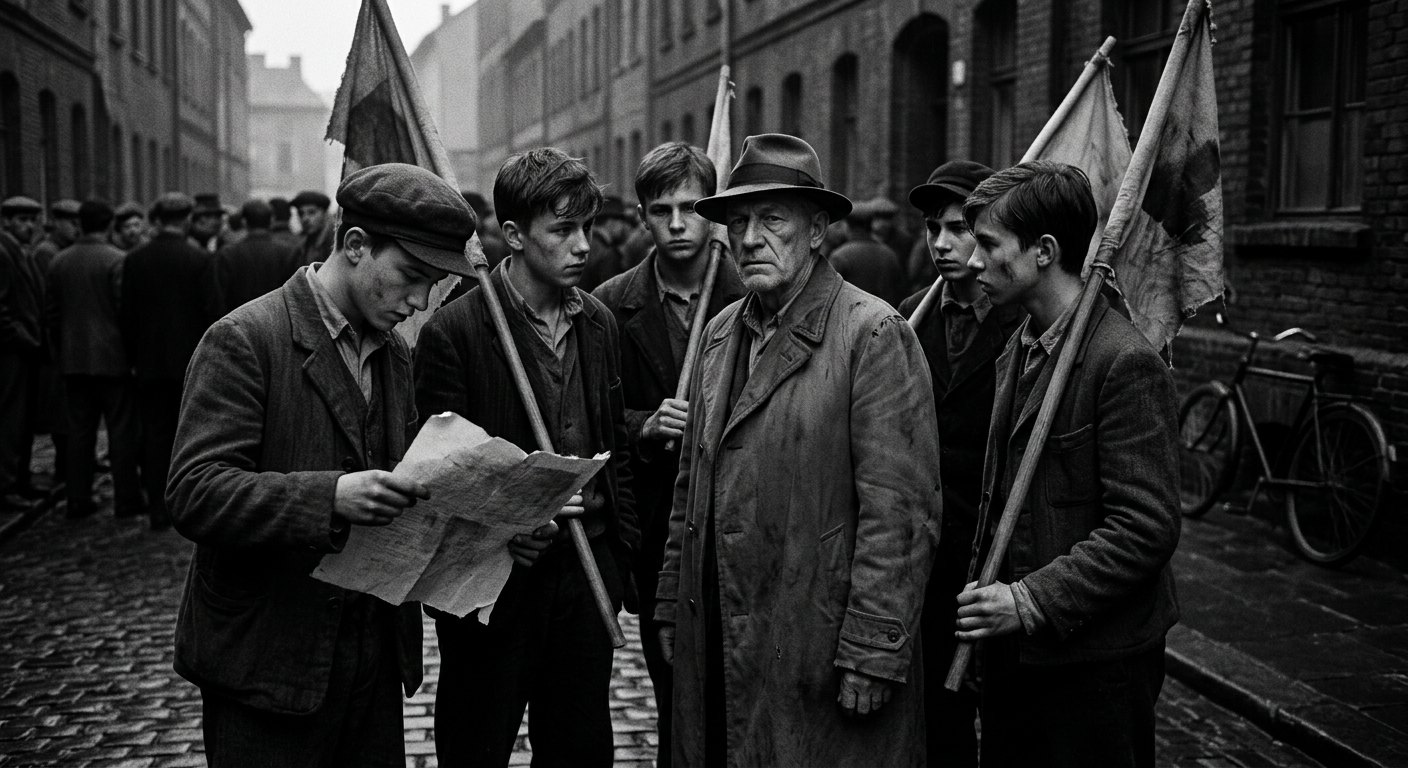
Instead, the government-controlled presses ran headline news praising the Red Guards. They published spectacular, uplifting images of millions of teenagers wearing red armbands marching through Tiananmen Square. They showed jubilant youth waving red flags and little red books. The media intentionally created a powerful, unified image of a "great revolution" while entirely erasing the bloody reality happening on school campuses.
As an intelligence gathering mechanism, the mass media failed the citizens completely. If a citizen relied on the newspaper, they would think a glorious youth movement was sweeping the nation. If they walked onto a local school playground, they would find teachers forced to crawl on coal cinders until their knees bled.
Our team must understand that state-sanctioned violence will never be accurately reported by state-aligned media. The authorities purposely ignored the facts. Even dissident publications at the time barely mentioned the murders because the brutality was rationalized as "unavoidable radical behavior." When assessing the threat level of social unrest in your region, you cannot rely on national broadcasts. You must establish decentralized, localized intelligence networks. If you do not have eyes and ears on the ground in your specific sector, you are flying blind.
The Weaponization of the Youth
Why did the architects of the Cultural Revolution target the youth? In my military career, I studied insurgencies across the globe. Insurgents and radical political movements always target the young because teenagers lack fully developed prefrontal cortexes. They are highly susceptible to peer pressure, they seek identity and belonging, and they view the world in absolute, black-and-white terms.
At the Middle School attached to Qinghua University, students forced their principal and vice-principal to wear black cloth labeling them the "head of the black gang." They shaved the heads of female teachers in a humiliating style called the "yin-yang head." They forced educators to beat each other, threatening, "If you don't beat each other, we will beat you both."
This is the weaponization of peer pressure combined with the removal of consequences. The Red Guards were granted immunity by the highest levels of government. When young people are told they are the saviors of the nation, and that their traditional authority figures are the enemies of progress, they will commit atrocities that seasoned combat veterans would refuse.
We are seeing the early stages of this ideological subversion today. We see youth mobilized to shut down dissenting speech, label political opponents with dehumanizing terms, and demand the removal of institutional leaders. The tactics of 1966 are being repackaged for the modern era. As community leaders, our primary defensive posture must begin inside our own homes. We must insulate our families from ideological contagions.
Psychological Warfare and Forced Compliance
The Red Guards did not just want to kill their teachers; they wanted to break their spirits. They forced educators to sing the "Song of Ox-Ghosts and Snake-Demons," an ode of self-condemnation. Years later, investigators found that the surviving teachers had blocked the lyrics from their memories due to the severe trauma, remembering only the first line: "I am an ox-ghost and snake-demon."
At the Middle School attached to Beijing University, students forced pregnant vice-principal Liu Meide to crawl on the playground and repeat, "I am a poisonous snake." A student then posed with a foot on her back for a photograph before kicking her to the ground. Her baby died from the prenatal injuries.
This level of psychological torture is designed to establish absolute dominance. It forces the victim to agree with their own destruction. The goal is to silence resistance through overwhelming cruelty. And it worked. The investigation notes that "cruel oppression silenced resistance." The teachers, stripped of their support networks and facing a mob of hundreds, could not organize a defense. Several committed suicide, including a twenty-six-year-old chemistry teacher who jumped from a chimney after a brutal "struggle meeting."
If we find ourselves facing localized mob violence, early recognition and immediate egress are the only viable strategies. You cannot reason with a mob that has been authorized by the state to destroy you. You cannot debate an ideology that requires your public humiliation as a condition of its success.
Building the Counter-Narrative Through Leadership
How do we lead through this kind of threat? I believe in servant leadership. Real leadership is about building people up, forging strong bonds of mutual trust, and creating communities that are highly resistant to outside manipulation.
During the Cultural Revolution, the targeted individuals were isolated. They were singled out, labeled, and cut off from their peers. To survive a period of intense social decay, we must build our alliances right now. We need to identify neighbors, coworkers, and community members who share our core values of liberty, individual rights, and the rule of law.
We must create operational cells that provide mutual support. If a member of our team is targeted by a modern "struggle session"—whether online or in physical space—the rest of the team must stand in the gap. Mobs thrive on isolating single targets. When they encounter a unified, disciplined group that refuses to break ranks or apologize for fabricated crimes, the mob's momentum shatters.
We must also take direct responsibility for the education and moral development of the next generation. We cannot outsource the molding of our children's minds to institutions that may be hostile to our values. We must teach them history. We must teach them about the Red August. We must equip them with the critical thinking skills necessary to reject mass formation psychosis.
Preparedness is not a solitary endeavor. The lone wolf dies in the woods. Survival requires a team, and that team must be built on a foundation of unshakeable trust and shared reality.
Tactical Action Plan for Social Decay Resilience
To fortify your family and your local network against the threat of localized mob violence and ideological subversion, implement these specific measures immediately: