Most civilians build their defense plans around fantasy scenarios where everything works flawlessly. In the military, we build our plans around the absolute certainty that equipment will break, communication will fail, and people will die.
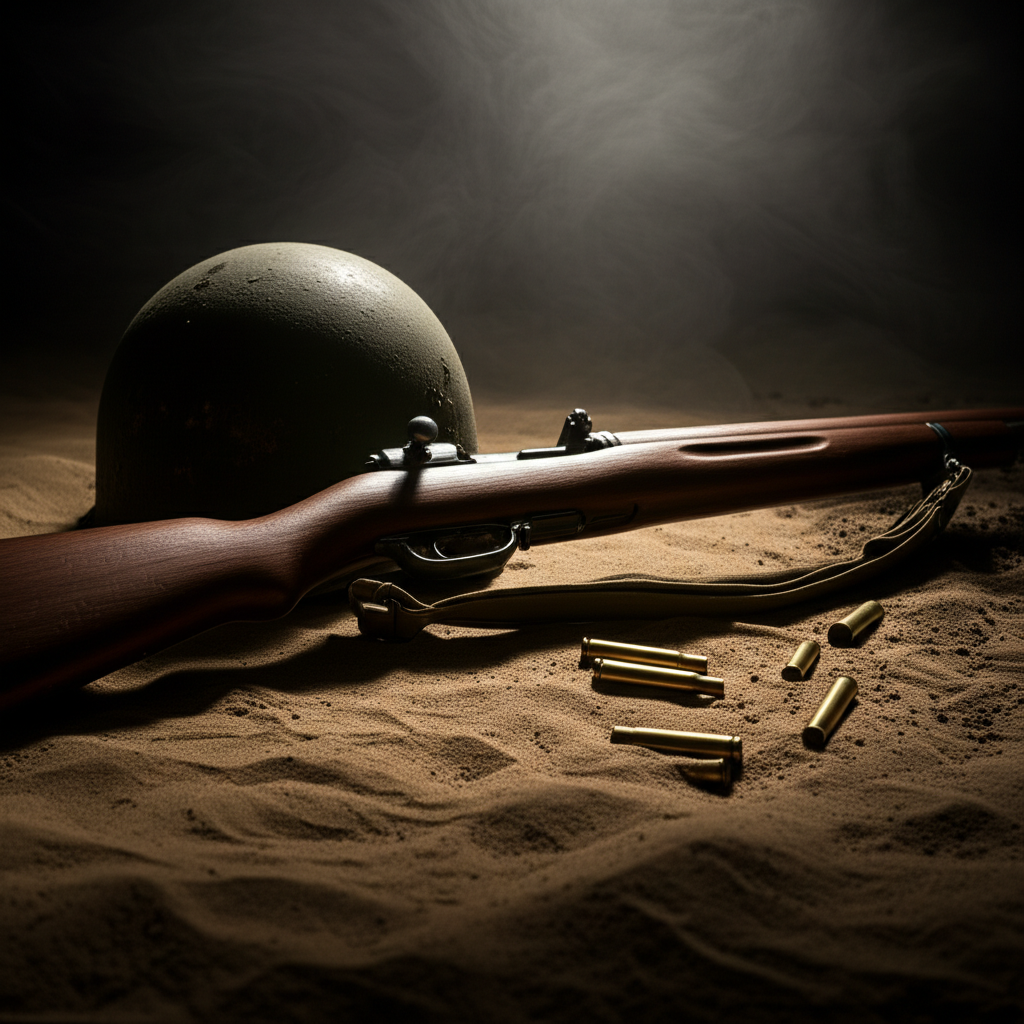
If you want to understand how a localized defense strategy actually holds up under extreme pressure, you need to look at the history of the Browning Automatic Rifle (BAR) in the Pacific theater of World War II. The tactical lessons learned in those jungles—paid for in blood—reveal exactly why most modern prepper defense plans will shatter upon first contact with a dedicated threat.
The military originally designed the BAR to solve a specific problem in a specific environment. When that environment changed, the weapon's intended use became obsolete overnight. The soldiers who survived were the ones who adapted their gear, decentralized their firepower, and eliminated single points of failure within their ranks.
As a former Army Ranger and security consultant, I assess civilian defense postures daily. The vast majority of families and mutual assistance groups are making the exact same structural mistakes the Imperial Japanese Army made in 1944. They concentrate their capabilities, fail to cross-train, and misunderstand the relationship between mobility and firepower. Here is your threat assessment on how to fix those vulnerabilities before a grid-down scenario makes them fatal.
Gear Follows Doctrine, Not the Other Way Around
John Browning engineered the BAR to solve the ultimate tactical nightmare of World War I: crossing open ground under fire. Standard issue bolt-action rifles fired 15 aimed shots per minute, requiring manual cycling. If infantry stopped to shoot, artillery obliterated them. If they ran without shooting, machine guns cut them down.
The military developed Walking Fire doctrine to bridge this gap. Soldiers equipped with the 16-pound BAR advanced while firing from the hip, throwing enough lead downrange to force enemy heads down during those critical seconds of exposure. Browning even designed the fire selector switch to be intentionally stiff so a man under stress couldn't accidentally flip it to "safe."
This is your first critical takeaway: Equipment must serve a defined tactical purpose. The military identified a problem (crossing open ground), developed a doctrine (Walking Fire), and built a tool (the BAR) to execute it.
Most preppers do the opposite. They buy an expensive rifle, bolt on heavy optics, lasers, and massive magazines, and then try to figure out how they will use it. If your primary objective is defending a suburban cul-de-sac from looters, you do not need a 14-pound rifle built for sustained suppressive fire at 600 yards. Define your defense doctrine first—whether that is static perimeter defense, bounding overwatch during a bug-out, or urban evasion—and select your weapons specifically to execute that plan.
The Lethality of Dead Weight
By the late 1930s, the Army tried to update the BAR for the next war by turning it into a light machine gun. They added a heavy bipod, a flash suppressor, and a hinged buttstock rest. The weapon swelled from 16 pounds to nearly 20.
But when American troops actually hit the jungle vegetation of the Pacific, that original Walking Fire doctrine proved utterly useless. You cannot hip-fire across open ground when visibility is cut to 10 yards. Furthermore, the military's "upgrades" actively hindered the soldiers. The troops responded by doing exactly what operators do in the field: they stripped the weapons down.
Combat Marines removed the bipods and ripped off the flash suppressors immediately. They recognized that in a high-stress, low-visibility environment, mobility dictates survivability. Carrying extra ounces of theoretical capability gets you killed when you need to pivot and engage a bunker complex at close range.
Look at your primary defensive rifle right now. If it weighs more than nine pounds loaded, you are making a mistake. In a prolonged grid-down scenario, you will be carrying that weapon while hauling water, chopping wood, or carrying an injured family member. Strip off the heavy bipods. Remove the oversized scopes. Keep a reliable white light, a durable sling, and an optic you can actually use under stress. Cut the dead weight before exhaustion forces you to do it in the field.
Penetration, Cover, and The Criminal Element
Between the World Wars, criminal syndicates capitalized on weak armory security and stole stockpiles of BARs. Clyde Barrow made the weapon his signature firearm for a very specific tactical reason: the .30-06 cartridge punched straight through the steel body panels of 1930s automobiles. The police were carrying Thompson submachine guns, and those .45 caliber rounds could not reliably penetrate that steel.
The criminals outgunned the authorities because they understood the difference between cover and concealment.
In a modern societal collapse or prolonged WROL (Without Rule of Law) scenario, desperate people will use vehicles, residential walls, and makeshift barricades to close the distance on your position. If your primary defensive platform relies exclusively on pistol-caliber carbines or shotguns loaded with birdshot, you have zero barrier penetration capability.
You must maintain at least one heavy-caliber platform—like a .308 or 6.5 Creedmoor—specifically designated for punching through intermediate barriers. If an organized threat uses a vehicle to breach your perimeter gate, a 9mm carbine will not stop the engine block. Understand the ballistics of your chosen platform and plan your fields of fire accordingly.
The "Marked Man" and Threat Identification
Post-war analysis revealed a chilling statistic: the average combat lifespan of a BAR gunner in a Pacific firefight was roughly 30 minutes.
The Japanese knew exactly what that weapon could do to a charging line of infantry. If they eliminated the man with the automatic rifle, they crippled the entire American squad's ability to lay down suppressive fire. Reports confirmed that Japanese soldiers learned to shoot the BAR gunner first every single time.
This translates to modern defense strategy in two distinct ways.
First, target priority. If you are defending your property against multiple attackers, you must immediately identify and neutralize their highest-casualty-producing capability. Do not focus on the loudest individual; focus on the individual carrying the rifle, the breaching tool, or the incendiary device. Neutralize their "BAR gunner" first.
Second, concealment of capability. If you are visibly the most heavily armed person in your group during a civil unrest scenario, you are the primary target. If you strap a plate carrier, a battle belt, and a scoped rifle to your chest while walking through a contested neighborhood, every sniper and opportunistic looter will drop you first to secure your gear. Keep your heavy defensive assets concealed until the exact moment you need to deploy them.
Redundancy vs. The Single Point of Failure
The greatest lesson from the Pacific theater lies in squad organization. The Japanese Type 96 light machine gun was an excellent weapon with quick-change barrels. But their entire 15-man squad was organized around supporting that single crew-served gun. Four men operated it, and the rest carried ammo or protected the gun team.
If that single machine gun jammed, or if artillery took out that specific four-man team, the entire Japanese squad lost all automatic fire capability instantly. They built a system with a catastrophic single point of failure.
The American Marines evolved in the exact opposite direction. Training doctrine established the BAR as a three-man operation (gunner, assistant gunner, ammo bearer). But more importantly, the Marine Corps distributed the capability. By 1944, a Marine squad consisted of three four-man fire teams, and every single fire team had its own BAR.
If one Marine BAR gunner went down, the assistant gunner picked up the weapon and kept firing. If that entire fire team was wiped out, the squad still had two more BARs operating on the flanks. The mathematics of redundancy worked in the American favor every single time.
I see prepper families replicate the Japanese mistake constantly. The father is the only one who knows how to operate the primary rifle, run the trauma kit, or start the backup generator. The wife and teenage kids are essentially just "carrying ammo." If the father takes a round in the first three seconds of an engagement, the entire family's defensive capability drops to zero.
You cannot rely on a single operator. You must implement the Marine Corps redundancy model inside your own home.
Execute Your Tactical Action Plan
To survive a severe security threat, you must eliminate single points of failure in your training and equipment. Implement these localized defense protocols immediately.
1. Institute mandatory cross-training for all group members.
Every adult and capable teenager in your group must know how to operate every primary weapon system you own. If your primary shooter goes down, the next person in line must instantly become the shooter. Conduct dry-fire drills until weapon manipulation is muscle memory for everyone, not just the head of the household.
2. Strip your patrol rifles of all non-essential weight.
Weigh your primary defensive rifle fully loaded. If it exceeds nine pounds, remove the bipods, heavy magnifiers, and excess rails. Your primary weapon must be light enough to fire from the shoulder while moving rapidly between cover. Keep the weapon streamlined.
3. Standardize your defensive platforms and calibers.
Do not field five different rifles taking five different magazines in your group. If you run AR-15s, ensure every rifle uses standard STANAG magazines and 5.56 NATO ammunition. During an engagement, a secondary shooter must be able to grab a magazine off a downed defender and immediately insert it into their own weapon.
4. Designate a barrier-penetration weapon.
Ensure your group has at least one larger caliber system (.308, .30-06, etc.) integrated into your defense plan. Stage this weapon specifically to cover high-risk avenues of approach where attackers might use vehicles or heavy barricades for cover.
5. Cache trauma gear on every defender.
Do not rely on a single, oversized medical bag stored in the house. Every individual standing watch or carrying a rifle must have a localized trauma kit (tourniquet, chest seals, hemostatic gauze) physically attached to their belt or rig. You cannot wait for the designated "medic" to cross open ground under fire.
6. Conceal your primary defensive assets.
If you must move through a contested area or negotiate with unknown individuals at your perimeter, keep your heavy weapons out of direct line of sight. Stage a rifle just inside the doorframe or have an overwatch shooter positioned in concealment. Do not present yourself as the "marked man" until lethal force is absolutely necessary.
7. Drill the transition from primary to assistant.
Run physical rehearsals where you simulate your primary shooter taking a casualty. The secondary defender must instantly step up, secure the weapon, and continue engaging the threat without waiting for instructions. Hesitation during that transfer of responsibility is exactly what gets the rest of the squad killed.